
Consider a small graphic design firm that completes a project for $2,000. After several attempts to collect payment, the client is unresponsive and declares bankruptcy. The firm decides to write off the amount using the direct write-off method. Accountants and financial advisors can provide valuable guidance tailored to a business’s specific needs. Using such tools can increase efficiency, reduce errors, and provide valuable insights into credit management performance. A written explanation outlining the rationale behind the decision to write off the debt further strengthens the legitimacy of the action.
- Thus, the profit in the initial month is overstated, while profit is understated in the month when the bad debts are finally charged to expense.
- Therefore it is not advised to use the Direct Write-off Method to book for the uncollectible receivables.
- Since the estimation of uncollectible accounts is done periodically, businesses can adjust the allowance based on changes in the economic environment or specific customer circumstances.
- On to the calculation, since the company uses the percentage of receivables we will take 6% of the $530,000 balance.
- Automated systems can streamline this process by sending scheduled reminders and escalating overdue notices without manual effort.
- Significant differences between a company’s reported inventory levels and its competitors can raise red flags for potential fraudulent activities.
- In this article, you’ll learn how to use the direct write-off method for your business and the potential advantages and disadvantages of a direct write-off.
Excise Tax and Refund Forms
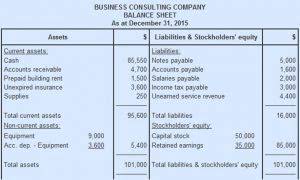
This eliminates the revenue recorded as well as the outstanding balance owed to the business in the books. Under the allowance method, a company needs to review their accounts receivable (unpaid invoices) and estimate what amount they won’t be able to collect. This estimated amount is then debited from the account Bad Debts Expense and credited to a contra account called Allowance for Doubtful Accounts, according to the Houston Chronicle. This distortion goes against GAAP principles as the balance sheet will report more revenue than was generated.
Accounting Methods: Direct Write-Off vs. Allowance Method
- We must make sure to show that Joe Smith paid the amount he owed, not just the fact that the company received some cash.
- Overestimating bad debts can result in understating net income and accounts receivable, while underestimating can lead to an overstatement of financial health.
- After two months, the customer is only able to pay $8,000 of the open balance, so the seller must write off $2,000.
- They can also use our software’s data analytics and reports to double-check accounts for consistency, accuracy, and even fraud.
- The client initially promised to pay after three months but didn’t do so.
These kinds of customers are normally put on the blacklist in the business world, and entities should not continue doing business with them. Learn how small businesses can handle bookkeeping effectively and scale faster with clean books. Due to the drawbacks of the direct write-off approach, the allowance method is more frequently used.

Sales
- This case study demonstrates how improperly handling inventory write-offs can lead to significant financial statement misstatements and regulatory consequences.
- As stated previously, the amount of bad debt under the allowance method is based on either a percentage of sales or a percentage of accounts receivable.
- Under the direct write-off method, a bad debt is charged to expense as soon as it is apparent that an invoice will not be paid.
- The direct write-off method offers a straightforward, albeit sometimes less timely, approach to recognizing uncollectible accounts, making it suitable for smaller businesses or those with minimal bad debt exposure.
- Instead, it offers an immediate, clear-cut resolution to a common and frustrating issue—unpaid invoices.
- However, the direct write off method allows losses to be recorded in different periods from the original invoice dates.
- The direct write-off method may not be the perfect solution for every business, but it definitely has its perks.
In this case, the accounts receivable account is reduced by $3,000 and is recorded as a bad debt expense. The IRS allows unearned revenue bad debts to be written off as a deduction from total taxable income, so it’s important to keep track of these unpaid invoices in one way or another. It’s also important to note that unpaid invoices are categorized as assets, which are debited in accounting. To better understand the answer to “what is the direct write-off method,”? The direct write-off method of accounting for bad debts allows businesses to reconcile these amounts in financial statements. If Beth later receives the payment from the customer, she can reverse the write off journal entry by crediting bad debt and debiting accounts receivable.
What is Paid in Capital?
Since bad debts are only recorded when they are confirmed, this method provides a more accurate reflection of the company’s financial position at a specific point in time. It allows businesses to react quickly to non-payment issues and take appropriate actions to recover the outstanding amounts. Overestimating bad debts can result in understating net income and accounts receivable, while underestimating can lead to an overstatement of financial health. These estimation errors can impact the reliability of financial statements and may require adjustments in future periods. The Direct Write-Off Method offers a simple approach to managing bad debts, particularly for small businesses. While it has its limitations, understanding its application and implications is essential for accounting professionals and those preparing for Canadian accounting direct write off method exams.
Complexity of Accounting Process
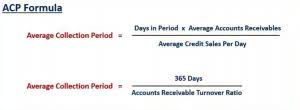
To address bad debts under the allowance method, you would review your unpaid invoices at the end of the year (or an accounting period) and estimate how much of these you won’t be able to collect. In 2007, the Canadian food processor Saputo Foods USA Inc., recorded a $63.5 million pre-tax provision for inventory write-downs due to spoilage of its dairy products. The company’s perishable inventory was affected by a power outage at one of its facilities, which led to the expiration and subsequent disposal of the affected products.
The issue stemmed from incorrect accounting for markdowns and write-offs for obsolete inventory. The company’s policies allowed store employees https://www.bookstime.com/ to mark down or write off inventory without proper documentation, resulting in a misapplication of the allowance method. The write-offs were understated in the financial statements, leading to an overstatement of inventory and a corresponding understatement of cost of goods sold.
- We must create a holding account to hold the allowance so that when a customer is deemed uncollectible, we can use up part of that allowance to reduce accounts receivable.
- This way, during U.S. income tax reporting season, you can declare the debt and it is written off from your business’s total taxable income.
- If you’re wondering which method is best for your small business, speak with a professional for insights into your specific situation.
- The direct write-off method doesn’t adhere to the expense matching principle—an expense must be recognized during the same period that the revenue is brought in.
- The allowance method is based on the principle that businesses should anticipate bad debts and recognize these potential losses in the same accounting period when the revenue is earned.
- You follow up with said customer multiple times over several months to receive payment.
For example, writing off a large and material account immediately might not be proper. Let’s consider an example to understand how a business uses the direct write-off method to account for bad debts. How long is appropriate for a company to leave past due A/R on the books before writing it off? There are a few accounts that have been on the A/R Aging Report for over a year, some even over 2+ years. When I request that we write them off as bad debt, the president of the company keeps telling me he wants to leave them on there longer. How do you record the sale of inventory to a customer who the credit manager deems will have a 10% chance of paying?