
Wow! I didn’t expect to get excited about a credit-card-sized piece of silicon, but here we are. Seriously — the idea that your crypto keys can live on a tap-once smart card, travel in your wallet, and still play nicely with dozens of chains feels like progress. My instinct said this would be clunky at first. Then I tried a few workflows, and things improved fast.
Here’s the thing. Most people who hold multiple assets end up juggling apps, custodial accounts, spreadsheets, and, yeah, paper notes that look like grocery lists. That chaos is exactly why smart-card hardware wallets — think NFC smart cards that sign transactions without exposing private keys — have gained traction. They simplify multi-currency management while keeping keys offline. But of course there are trade-offs, and backup strategies matter a lot.
On one hand, smart cards make everyday use ridiculously simple: tap your card to a phone, authorize a payment, done. On the other hand, you need a recovery plan. If that tiny card is lost, shredded, or stolen, you’ve got a real problem unless you prepared. So let’s walk through how multi-currency support works on these devices, what backup cards do, and practical setups that balance security with convenience.
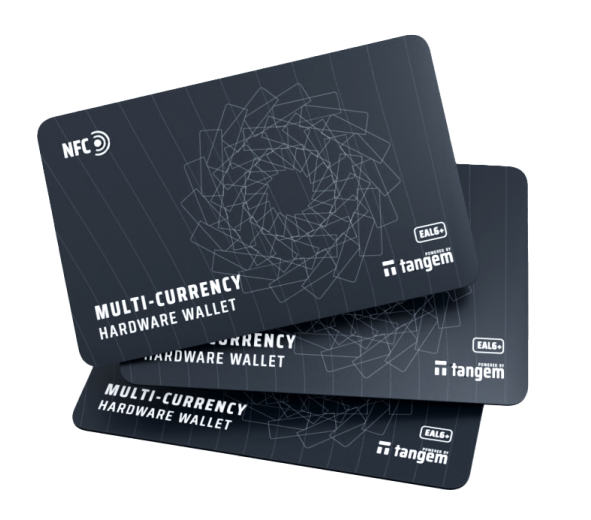
How multi-currency support actually works
Short answer: the card stores keys and the wallet software handles chain-specific logic. Medium answer: the secure element on the card generates or stores the private key and performs cryptographic signing locally, while apps translate that signed data into chain-specific transactions (Ethereum, Bitcoin, Solana, and so on). Long answer: different blockchains have different transaction formats, gas models, and fee mechanics; wallet apps and SDKs bridge that gap by preparing a transaction payload that the card signs, then the app broadcasts the signed transaction to the relevant network — so the device itself can remain agnostic to many chain-specific details, though firmware and app integrations determine actual compatibility.
In practice that means two things for users. First, one physical card can, depending on implementation, secure multiple currencies. Second, support quality varies: some tokens require app-side handling or custom integrations, so “multi-currency” is a moving target. Tools and partnerships matter; reputable card vendors publish supported coin lists and SDKs so third-party wallets can add compatibility.
Backup cards: redundancy without paper panic
Okay, so backups. People often picture seed phrases written on paper. Old-school. I’m biased, but paper has its own failure modes — water, fire, the roommate who thinks it’s a coupon. Backup cards offer a different model: hardware redundancy. You can provision multiple physical cards that are cryptographically tied to the same private key (or derived in a coordinated way), so if one card is lost, another card serves as the key. Sounds neat, right? But it raises operational questions.
First: storage. Keep backups physically separate — one at home, one in a safe deposit box, maybe one with a trusted relative or lawyer. Second: lifecycle. If you rekey or rotate, remember to update all backups. Third: trust model. Multiple identical cards mean multiple single points of failure unless you plan for multi-signature or Shamir-style split backups. There’s no one-size-fits-all.
On balance, backup cards are a practical middle ground for users who want non-custodial control but dislike seeds. They remove human error from retyping long phrases and reduce the “paper hassle.” That said, if you want cryptographic splitting — say Shamir’s Secret Sharing — look for devices and workflows that explicitly support it. Not all smart-card ecosystems do.
Real workflows I recommend (that I actually use in tests)
Test setup one: single-card day-to-day + two backup cards. Keep backups in separate, secure locations. Use a reputable wallet app that integrates with the card and supports the chains you use. Pros: frictionless daily spending, fast recovery if you lose one card. Cons: if someone gains access to a backup and your day card, you’re exposed.
Test setup two: primary card + one cold backup that is only used for recovery + a custodial small-balance account for quick on/off ramps. This hybrid keeps a huge portion of funds air-gapped while allowing smaller amounts to move fast. Pros: strong security for large holdings. Cons: you still rely on a custodial service for quick liquidity — so choose wisely.
Test setup three: multisig combined with smart cards. This is more advanced and a bit clunkier on mobile, but when you combine multiple cards (or cards + hardware dongle) across people or locations, you greatly reduce theft risk. For high-net-worth users, it’s worth the extra steps.
What to watch for — practical risks and mitigations
Firmware and supply chain. Who made the card? Has the firmware been audited? You need transparency. Seriously, don’t shrug this off. If a card vendor hides technical details, assume risk.
Compatibility. Before buying, double-check coin and token support for your wallets. Some specialized tokens need special signing logic. My initial assumption was that “all tokens work.” Actually, wait—let me rephrase that—many do, but some require extra integration steps and might not be supported out of the box.
Usability traps. NFC is great, but some phones are finicky. If your phone model doesn’t reliably read the card, plan for a different device or another workflow. Also, recovery processes vary: some cards require physical presence and NFC access to set a backup; others use QR or companion apps.
Regulatory and legal considerations. If you store backups with a third party, think contractually. I’m not a lawyer, but keeping a legal chain-of-custody for high-value assets can matter.
Where to learn more and try one
If you want to explore smart-card hardware wallets and the backup-card approach in more detail, check out this hands-on resource: https://sites.google.com/cryptowalletuk.com/tangem-hardware-wallet/. It’s a practical place to see supported chains, integration notes, and common user flows — helpful if you’re shopping or designing a backup plan.
FAQ
Are smart cards as secure as seed phrases?
They can be. Smart cards keep private keys in a secure element and never expose the key material. That reduces human error. But seeds have the advantage of being offline and universally compatible. Choose based on your threat model: if theft is your worry, cards help; if long-term recoverability across different vendors is the worry, seeds are more portable.
Can one card really manage dozens of coins?
Yes, often. The card signs transactions and the wallet app handles chain specifics. Still, not every token is supported everywhere, so check the compatibility list before loading obscure assets.
What happens if all my cards are lost?
If you used only hardware cards without a seed or split backup, and you lose every card, recovery can be impossible. That’s why redundancy and diverse backup strategies are essential. Consider at least one geographically separated backup or Shamir-like splitting for critical balances.